
Decision Intelligence solutions for complex operations
Aleph5 builds solutions that integrate enterprise data, AI/ML models, business rules, and advanced optimization algorithms. Every solution starts from the real operational problem: constraints, available data, indicators, users, and execution.
Inventory optimization
Defines inventory policies and parameters by SKU and location, considering demand behavior, variability, service level, working capital, obsolescence, and stock-out risk.
How Aleph5 solves it: Aleph5 applies probabilistic demand models, multi-scenario simulation, and optimization algorithms. The solution adjusts parameters as markets change and enables more granular decisions by product and location.

for_whom
Who it is for
Supply chain, inventory, operations, finance, and commercial teams that need to balance product availability with efficient use of capital.
active_constraints
Problems it addresses
- High inventory with no correspondence to service.
- Stock-outs and lost sales.
- Inventory policies that do not reflect real demand variability.
- Manual parameters that are hard to maintain by SKU, location, or node.
x* → operations
Expected results
Better availability, less obsolescence, working-capital control, and analytical inventory management.
Demand planning
Generates more reliable forecasts and consensus to coordinate commercial, operational, and financial decisions using time series, machine learning, and collaborative mechanisms.
How Aleph5 solves it: Aleph5 combines time-series models, machine learning, and structured collaborative mechanisms. The solution evaluates multiple models and learns from historical behavior to produce a consensus forecast.

for_whom
Who it is for
Demand planning teams, S&OP, sales, operations, finance, and leaders responsible for anticipating market needs.
active_constraints
Problems it addresses
- Inaccurate forecasts.
- Overstock or operational firefighting.
- Different versions of demand across areas.
- Difficulty learning from historical performance.
x* → operations
Expected results
Better alignment between sales, operations, and finance; less reactive decision-making; one trusted version of demand.
Supply chain planning
Models operational networks to balance demand, capacity, costs, inventories, service levels, and business constraints, with the ability to simulate scenarios before executing decisions.
How Aleph5 solves it: Aleph5 models the network through mathematical optimization, including linear and integer programming where applicable. The platform lets teams simulate scenarios before executing decisions.

for_whom
Who it is for
Supply chain directors, planners, and operations teams in manufacturing, mining, industrial goods, and chemicals.
active_constraints
Problems it addresses
- Imbalance between supply, capacity, and demand.
- Bottlenecks not identified in time.
- Difficulty evaluating what-if scenarios.
- Financial planning disconnected from real capacity.
x* → operations
Expected results
Demand and capacity allocation with unified criteria, bottleneck visibility, and fast economic analysis.
Production scheduling
Generates feasible sequences and plans under technical constraints, setups, asset availability, commercial priorities, and operating conditions.
How Aleph5 solves it: Aleph5 uses combinatorial optimization algorithms and can integrate monitoring to enable dynamic rescheduling when operating conditions change.

for_whom
Who it is for
Production planners, plant managers, and teams in discrete manufacturing, continuous processes, food and beverage, and metallurgy.
active_constraints
Problems it addresses
- Inefficient sequences.
- Constant last-minute changes.
- Low operational visibility.
- Order delays or suboptimal use of critical assets.
x* → operations
Expected results
Feasible schedules, better use of critical assets, and the ability to reschedule when things change.
Transportation scheduling
Supports planning, routing, assignment, execution, and rescheduling of resources for passenger and cargo transportation under operational constraints.
How Aleph5 solves it: Aleph5 applies routing and assignment algorithms under constraints such as time windows, capacity, costs, regulations, and safety rules. The Senda cases show models for planning, scheduling, execution, and rescheduling.

for_whom
Who it is for
Fleet operators, logistics, distribution, public transportation, urban mobility, and teams responsible for units, drivers, routes, and compliance.
active_constraints
Problems it addresses
- High logistics costs.
- Low fleet utilization.
- Lack of execution visibility.
- Need to react to incidents, changing demand, or resource availability.
x* → operations
Expected results
Dynamic assignment of units and drivers, compliance with safety rules, and fast response to incidents.
Information and data management
Integrates, cleanses, and structures information from ERP, CRM, and corporate databases so critical decisions rest on reliable data, with quality, traceability, and governance.
How Aleph5 solves it: Aleph5 structures the data that feeds analytical models, algorithms, and decision platforms, enabling quality, traceability, and governance for operational applications.

for_whom
Who it is for
CIOs, data leaders, analytics teams, operations, and IT groups that need to prepare information for AI/ML and optimization models.
active_constraints
Problems it addresses
- Inconsistent, scattered, or ungoverned data.
- Errors caused by poor information quality.
- Lack of traceability.
- Difficulty scaling advanced analytics.
x* → operations
Expected results
A reliable data layer that feeds analytical models and optimization algorithms.
How we deliver every solution
The same method behind all six solutions: start from the real process, build on reliable data, and leave behind an application the operation uses every day — not a report that gets filed away.

Step — 01
Understand
We map the real process: objectives, constraints, business indicators, and how users decide today.
Step — 02
Integrate data
We extract, cleanse, and structure the ERP, CRM, and corporate data that will feed the models.
Step — 03
Model and optimize
We formulate the mathematical model and algorithms that represent the business and solve them with proprietary technology and solvers.
Step — 04
Implement and improve
We build the application for daily operations, validate it with users, and adjust it continuously.
Proven in real operations
Aleph5's solutions support the daily operations of industrial organizations in Mexico and South America. Every case documents the challenge, the solution, and the results.
See all case studies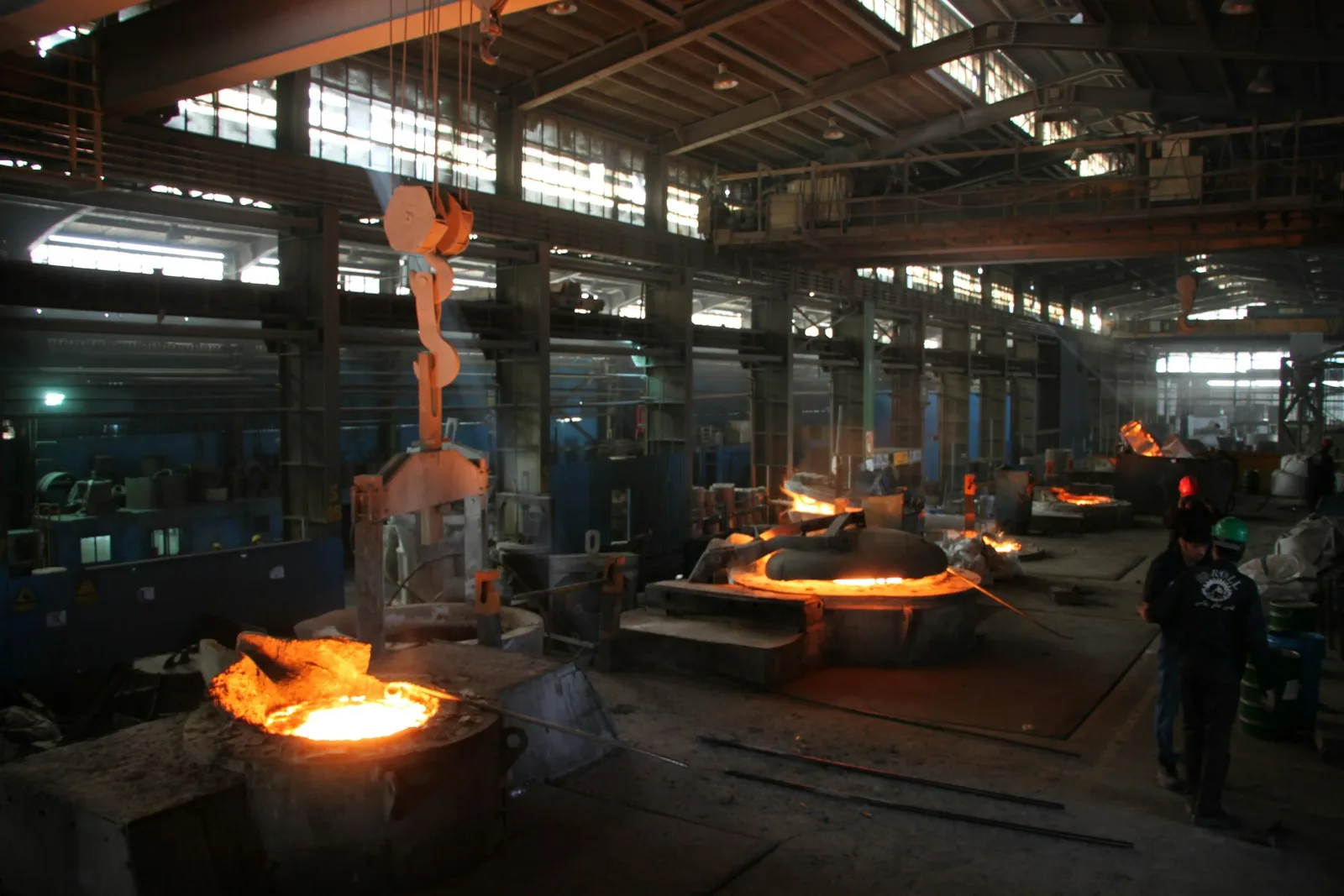
Vitro · Glass and Crystal
Operational planning of three furnaces with freight costs, production costs, and customer profitability.
Grupo Arauco · Supply chain
Mathematical model and institutional planning system for Arauco Maderas.
Senda · Transportation
Senda Logic: planning, scheduling, execution, and rescheduling of fleet and drivers.
Frequently asked questions
What is Decision Intelligence for complex operations?
An approach that connects data, business rules, analytical models, and optimization algorithms to support better operational decisions.
What data is needed to start a project?
It depends on the process. Typically transactional data, demand or production history, capacities, costs, constraints, business rules, and performance indicators.
Does Aleph5 replace ERP or CRM systems?
No. Aleph5 uses ERP, CRM, and corporate data to build an analytics and optimization layer on top of those systems.
Which solution applies to transportation?
Transportation scheduling applies when units, drivers, routes, services, or fleet resources must be planned, assigned, executed, and rescheduled under operational constraints.
“If you want the POWER to improve, Measure… if you want to Improve, Model.”
Peter Drucker
Proven in real operations
Arauco, Grupo Senda, Vitro, and Flecha Amarilla make daily decisions with Aleph5 models.