Articles · March 4, 2019
Is my job at risk in Industry 4.0?
The fear of being replaced by automation is real, but there are at least four reasons not to worry so much: the road to Industry 4.0 is a human-machine synergy.

The fear of being replaced
If you have taken part in expert-system or artificial intelligence projects, you know some people worry about being replaced by the system. That fear is fed by books, articles, conferences, and the media. While some work activities are becoming obsolete, computers are still far from replacing humans, and your job is most likely not as at risk as you might think.
The term Industry 4.0 is an initiative of the German government that became popular thanks to that country's scientific and technological prestige, with strong foundations in artificial intelligence. Its promises sound attractive to owners and executives, but some people fear for the continuity of their work — especially those doing analytical tasks today. Anyone starting Industry 4.0 projects must keep that concern in mind: results can suffer if a team member sees the project's success as a personal risk.
4 reasons not to fear so much
First: Industry 4.0 is a long-term vision (15 to 20 years) even in developed countries. It will not happen overnight; it will be a gradual process. For young people, a strong foundation in computing, mathematics, and science will become ever more relevant in order to work side by side with computers and robots.
Second: we have a distorted idea of artificial intelligence, presented by Hollywood as fantasy. In practice, an AI project means designing an approach that makes the most of human experience and combines it with computing power. The goal is not to replace humans but to discover tasks computers can take on — generally the repetitive, boring ones.
“The value of a well-made, well-used tool lies not only in what it produces for us, but in what it produces within us.”
Third: as Nicholas Carr notes in “The Glass Cage”, even a fully automated process risks over-dependence on the algorithm and the loss of original skills. Even an intelligent system built on human experience needs humans for monitoring, maintenance, and evolution — for example, in handling contingencies. Freed from monotonous tasks, teams gain room for deeper analysis and meaningful improvements.
Fourth: there are tasks no computer can perform, with no prospect of doing so soon: creativity, solving unknown problems, design, ingenuity, critical thinking — not to mention empathy, humor, and understanding. Jobs requiring human contact will be safe for decades.
Human-machine synergy
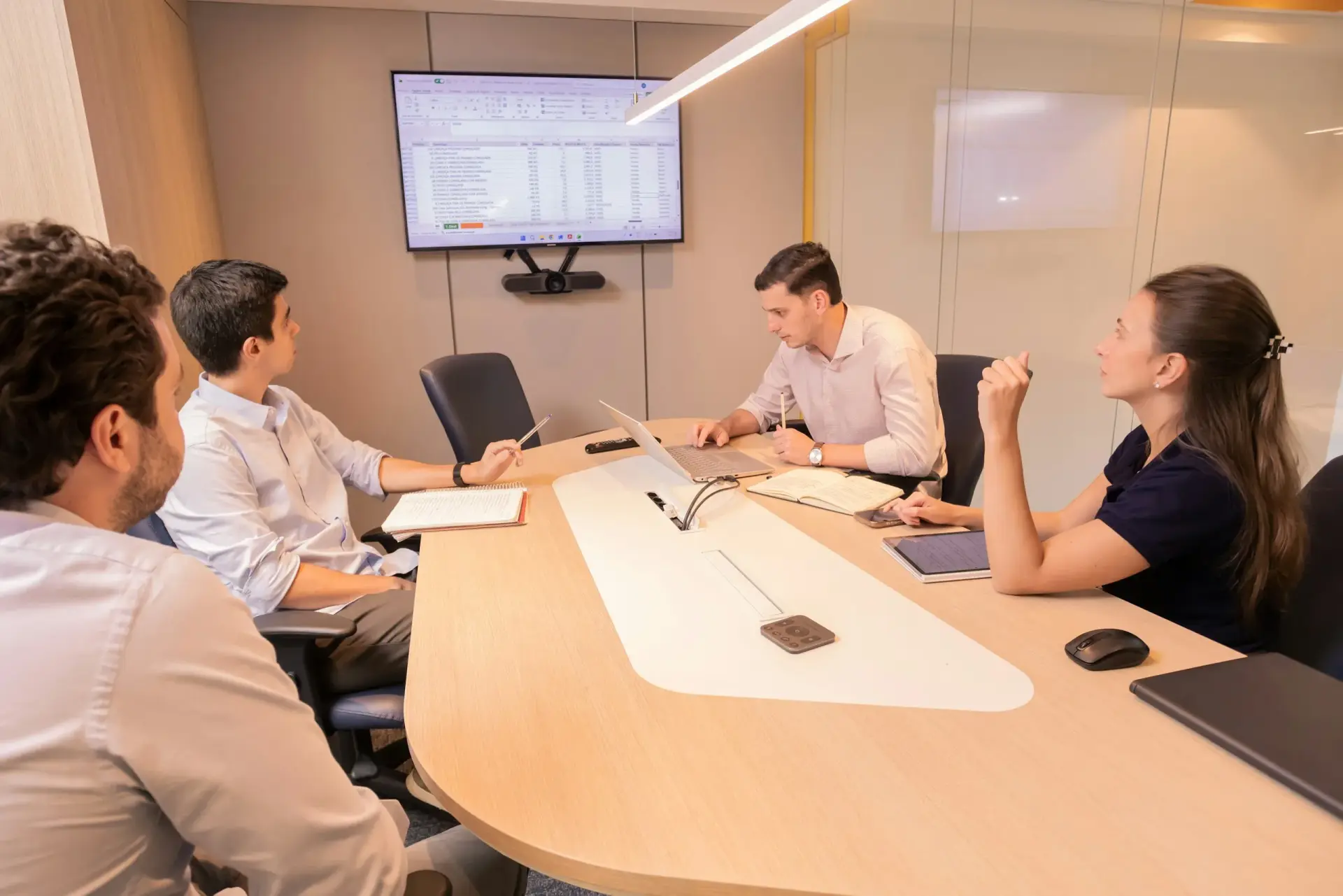
The road to Industry 4.0 is not a fight between humans and computers: it is a synergy that leverages the strengths of each actor, human or artificial, to obtain the best results.
Sources: N. Carr, “The Glass Cage” (W. W. Norton, 2015) · “Umsetzungsempfehlungen für das Zukunftsprojekt Industrie 4.0” (BMBF, 2013) · Karkalos, Markopoulos & Davim, “Computational Methods for Application in Industry 4.0” (Springer, 2019) · Popkova, Ragulina & Bogoviz (eds.), “Industry 4.0” (Springer, 2019) · D. Pink, “A Whole New Mind” (Riverhead, 2005).